About the Collaborators
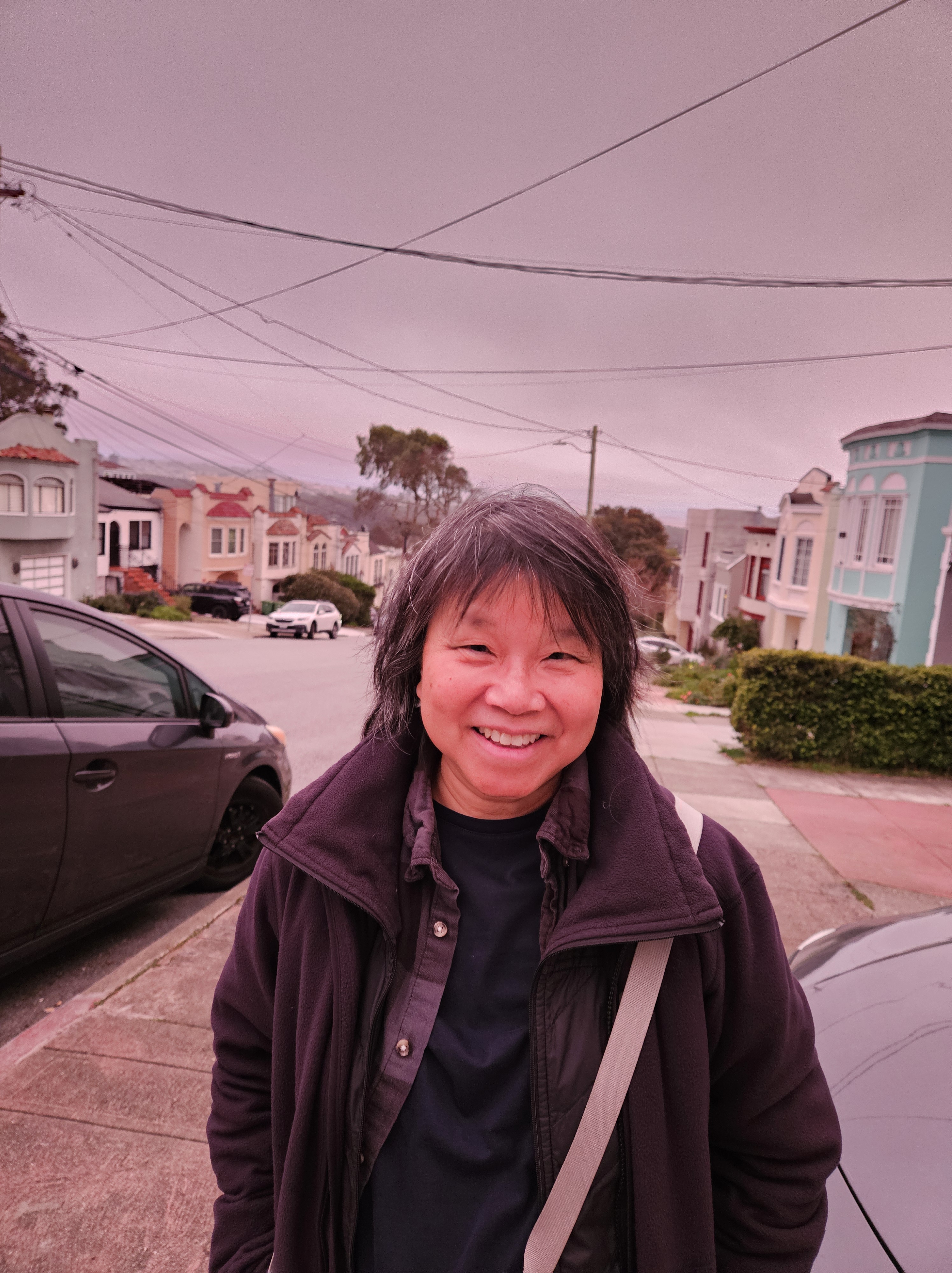
Janet Cowal
In college I played guitar in a band and became fascinated with transformational generative grammar because of how it relates to composing music and improvising with other musicians; this resulted in my majoring in linguistics. Since then, I have enjoyed work in applied linguistics including: perceptual testing of synthetic speech for video games, formal verification of computer network systems, computational linguistics involving name retrieval in large databases, teaching English as an additional language in China, and teaching linguistics, phonetics, and sociolinguistics as an Associate Teaching Professor in Portland State’s Applied Linguistics Department.
When I became a parent, social issues involving language such as education and language policy, and environmental, cultural, and linguistic sustainability became particularly important to me. As a parent, applied linguist, and 4th generation Asian-American, I feel strongly compelled to contribute to efforts addressing systemic inequities and creating inclusive environments for current and future generations. In addition, I am energized by visual and performing arts; collaborating with others in projects involving art and language gives me great joy. I believe positive change is possible when individuals using their different gifts and talents work together. Everyone has something valuable to contribute; being in the synergy of a community doing meaningful work is exciting and life-affirming!
Genevieve Leung
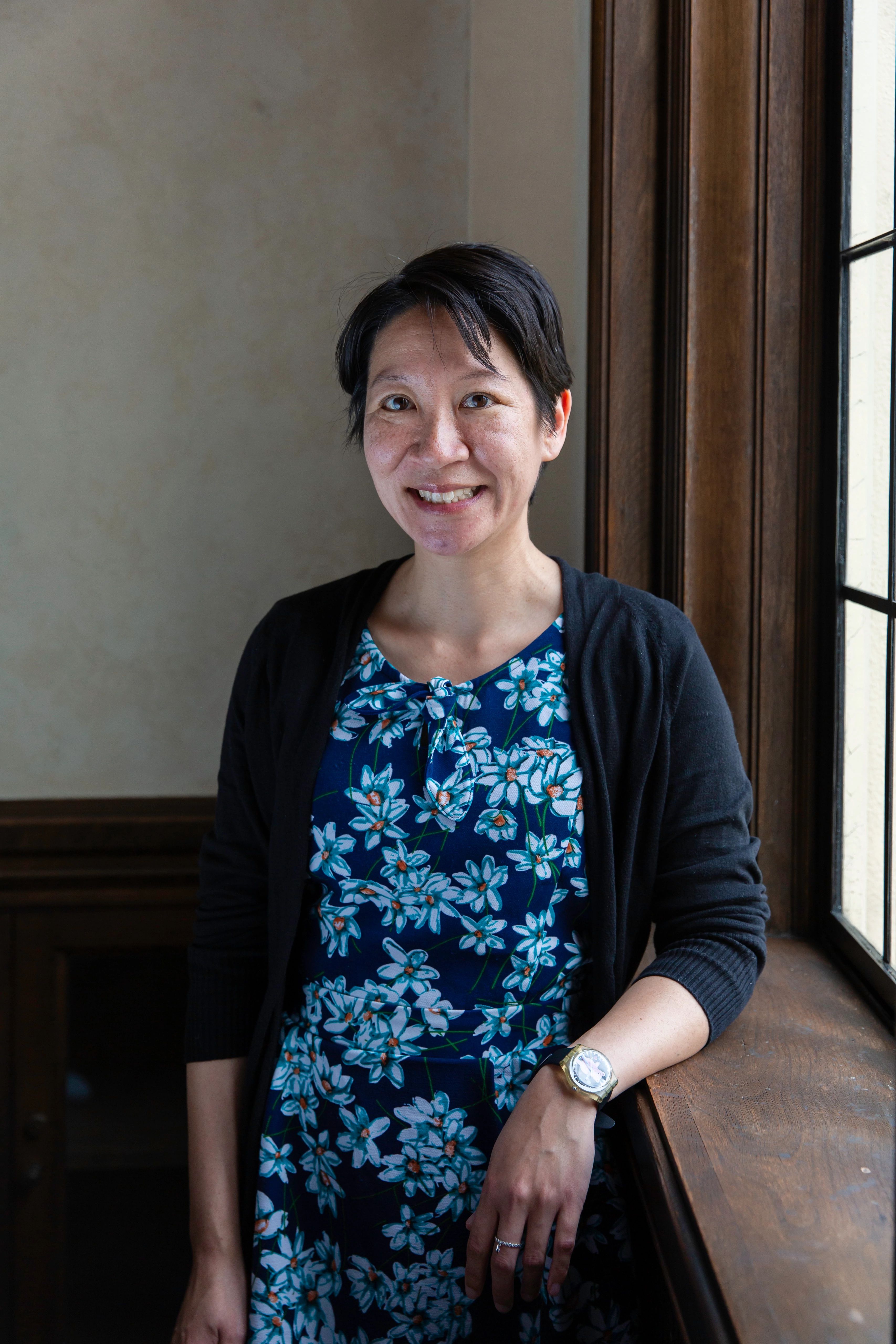
I grew up in San Francisco Chinatown with Cantonese as my first language. My family also spoke a variety of Cantonese called Hoisan-wa (台山話), spoken in the U.S. by the earliest Chinese immigrants who came to work as laborers. In Northern California, there are many Cantonese speakers, so I was rather shocked in college and graduate school to find that for many people, “Chinese” meant only Mandarin. Studying sociolinguistics and learning about minoritized languages and marginalized communities armed me with the vocabulary to discuss language, power, and ideologies circulating about language across diasporas and one-nation-one-language ideologies. Yet I felt like Cantonese and “Chineses” were being pushed out of the conversation when educators focused only on Mandarin and seemed less attuned to the diverse languages that encompass “Chinese.”
I also reflected on how (more Standard, wealthier Hong Kong) Cantonese speakers were denigrating Hoisan-wa speakers (whose ancestors were mostly uneducated, blue collar workers) for their “non-standard”-sounding Cantonese. These experiences helped me think about how language, power, class, and ideologies all interact and infuse into how people view language learning and teaching, particularly in decisions schools, teachers, and parents make in determining which language should be taught in school and/or maintained in the home. My lived experiences and training in educational linguistics helped set up the work and research that I am doing today, which is focused around education and language and cultural maintenance.
Maude Hines
I am a Professor of English and Chair of Black Studies at Portland State University, and a past president of the Children’s Literature Association. I received my Ph.D. in Literature from Duke University, along with graduate certificates in African American Studies and Women’s Studies.
I specialize in American literature, with emphasis on critical childhood studies, African American literature, and the Gothic. I am a founding member of PSU’s Homelessness Research & Action Collaborative (HRAC), and am currently completing a book about racial trauma and the temporal dimensions of gothic childhood.
Melissa Haeffner
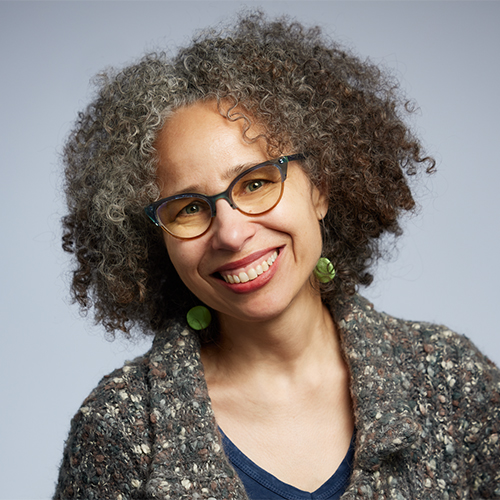
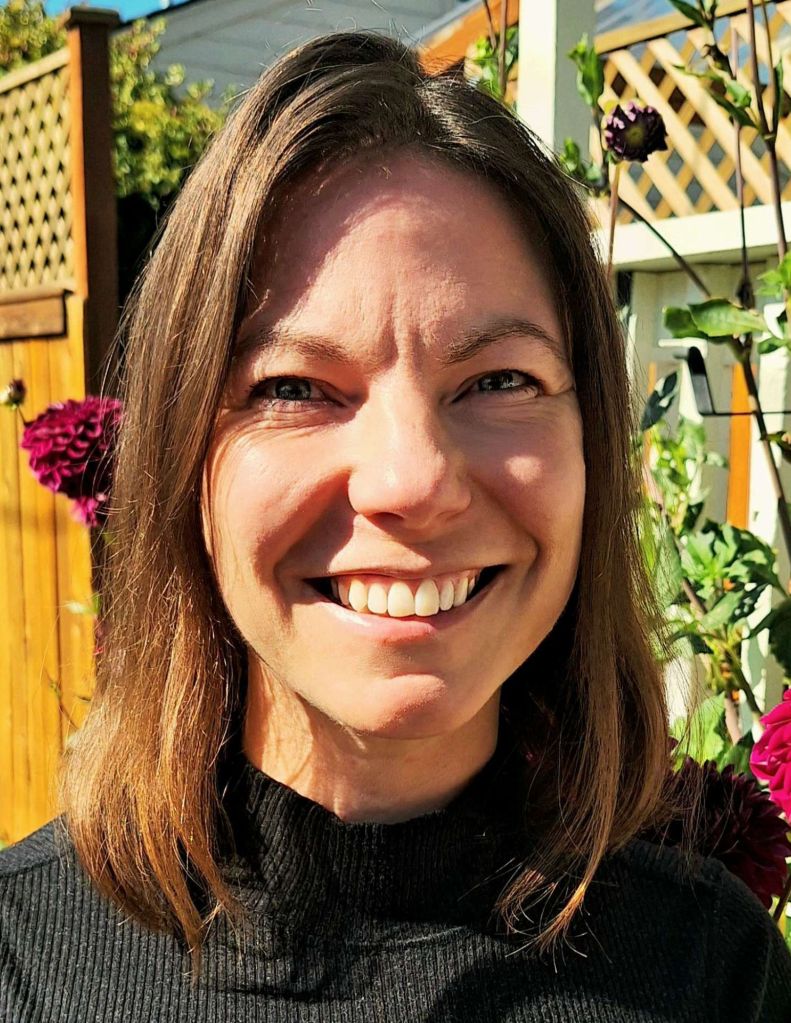
I am an Associate Professor at Portland State University. My research unifies several research domains that contribute to the knowledge of local politics in watersheds and how they shape urban water infrastructure development in the past, in the present, and under future predictions. My ongoing research and teaching commitments investigate water insecurity and justice within municipal water systems and the links between multi-scale policies, infrastructural and environmental conditions, and household behavior. My work focuses on “just water” and how social, political, and biophysical factors structure access to water, using the concept of environmental justice to draw attention to issues of fairness and equality in the ways different social groups gain access to natural resources. I received my PhD from Colorado State University (CSU) in the Graduate Degree Program of Ecology, with a specialization in human-environment interactions.
Diane Jacobs
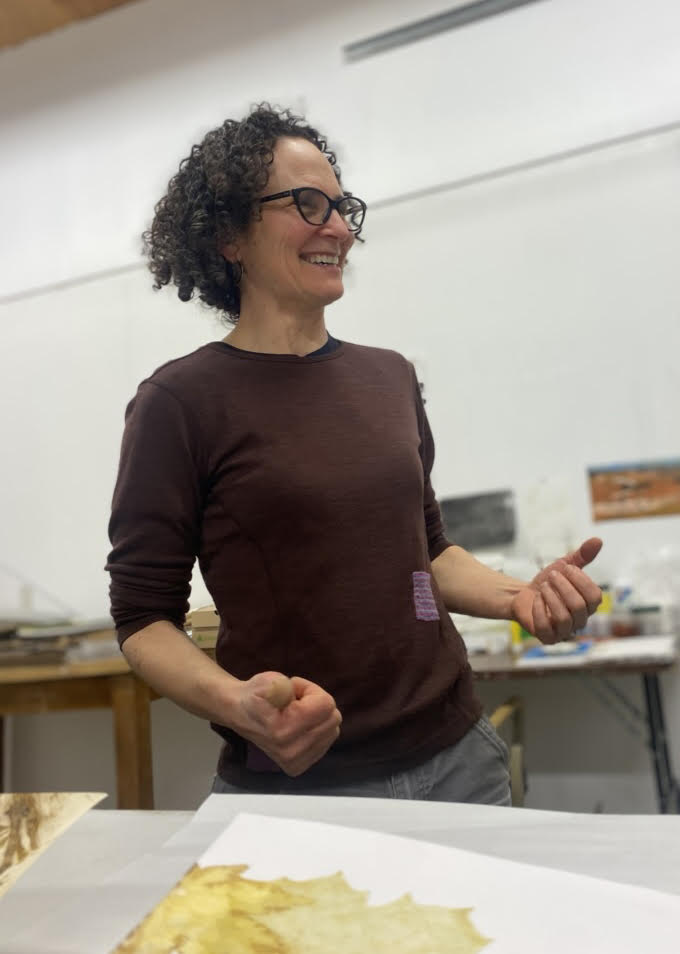
I discovered a deep connection to forests, feminist thinking, and social justice during my undergraduate years at University of California, Santa Cruz.—My work continues to be informed by the cross-pollination of these elements. I make artist books, installations, mixed-media sculpture, and works on paper influenced by research, personal experience, community engagement, and a conviction that art inspires change.
I earned an MFA in printmaking from San Francisco State University (1996), and received a Leo D. Stillwell Graduate Scholarship. I also was awarded a James D. Phelan Award in printmaking (1997), a Kala Art Institute Fellowship (1997), and an Artadia award (2000). I moved to Portland in 2002. I’ve received several Regional Arts and Cultural Council Project Grants (2005, 2008, 2012, 2019, & Arts 3C Grant in 2024), RACC Professional Development Grants (2009, 2014), Career Opportunity Grant from the Oregon Arts Commission/Ford Family Foundation (2010, 2015, 2020, 2024). I was a recipient of the following Artist-In-Residency Awards: Women’s Studio Workshop (1999), Signal Fire (2013, 2017), Kala Art Institute (2017), PLAYA (2016, 2024), Leland Iron Works (2018), Pine Meadow Ranch (2019), In Cahoots (2019), Township 10 (2024), and GLEAN (2024/5) My prints, sculptural work, and artist books are in The Portland Art Museum, The Getty Research Institute Library, SF MOMA, the De Young Fine Arts Museum, Achenbach Foundation, The New York Public Library, the Library of Congress, Walker Art Center, and over 60 other university and public institution’s special collections.
 Activist Applied Linguistics