
Learning at Lan su Chinese Garden
Where nature, language learning, and culture meet

Vision
- Create multi-sensory language learning activities
- Incorporate visual arts concepts to help with language acquisition
- Make a booklet for educators to as guidance for designing lessons in local gardens
Doers
Local artist Anne Storrs and linguist Janet Cowal worked together to create the activities, workshop design, and booklet for educators, drawing on their combined expertise.
Process
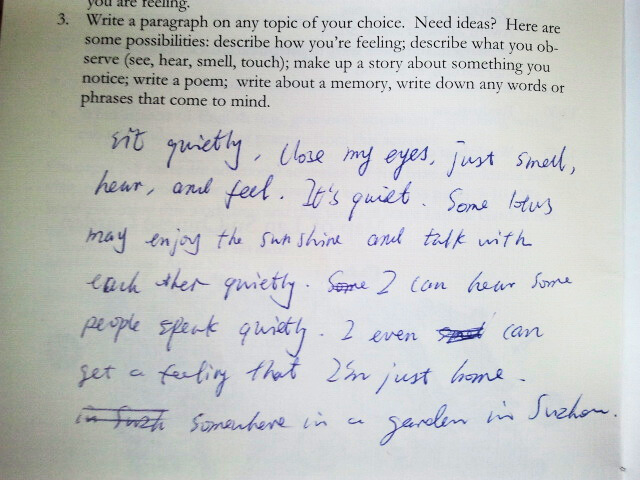
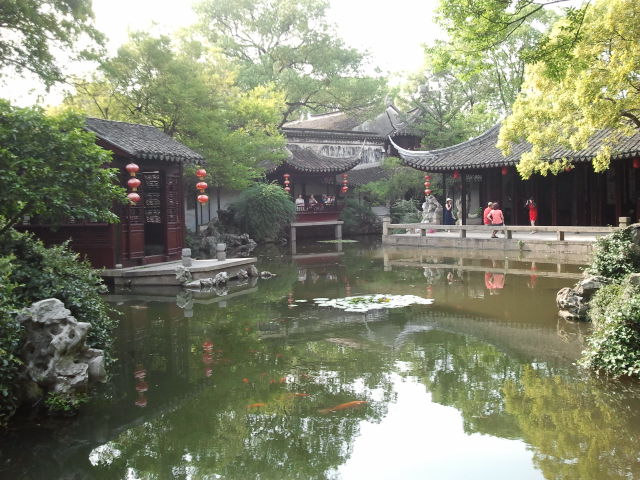
Using knowledge of second language acquisition and art concepts, Janet Cowal and Anne Storrs crafted a range of activities that draw on the environment as a resource.
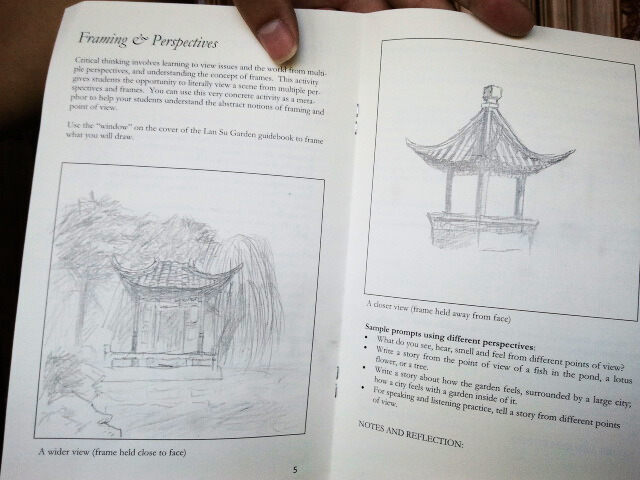
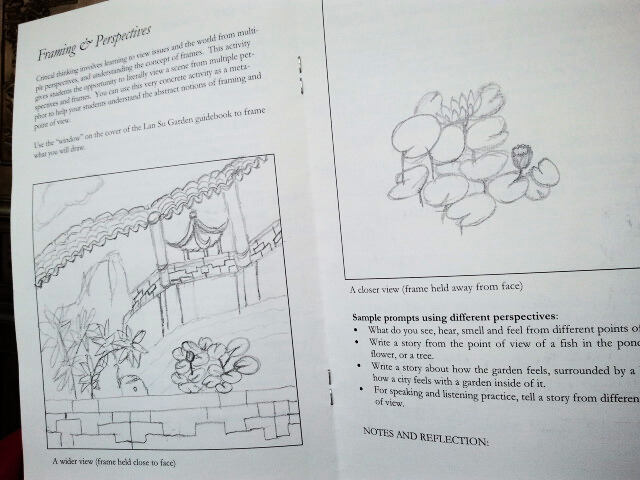
These included scaffolding grammar structures off mindful observation, an “antonym search,” and using visual framing to illustrate perspectives.
During the summer of 2015, approximately sixty K-12 teachers of English from Jiangsu, China used the educators’ booklet and participated in lessons while visiting Lan Su Garden, a classical Chinese garden located in downtown Portland, Oregon. The participants reflected on how they might use or adapt the materials and activities for their own classes in China and gave positive feedback on the lessons.

Finish Line, and Beyond
Click to see “Using Gardens for Language Learning”
It’s a constant challenge for educators to find meaningful, interesting ways to effectively engage their students. By incorporating visual and performing arts, multi-sensory activities, experiential learning, and outdoor education, using gardens as a learning space can contribute to successful learning outcomes for students of diverse backgrounds.
References and Recommended Reading
Bunting, M. (2006). Proactive Interference and Item Similarity in Working Memory. Journal of Experimental Psychology. Learning, Memory, and Cognition, 32(2), 183–196. https://doi.org/10.1037/0278-7393.32.2.183
Celce-Murcia, M., Brinton, D., Goodwin, J. M., & Griner, B. (2010). Teaching pronunciation : a course book and reference guide (Second edition.). Cambridge University Press.
Kolb, D. A. (1984). Experiential learning : experience as the source of learning and development. Prentice-Hall.
Medina, J. (2008). Brain rules : 12 principles for surviving and thriving at work, home, and school (1st ed.). Pear Press.
Rabkin, N., & Redmond, R. (2006). The Arts Make a Difference. The Journal of Arts Management, Law, and Society, 36(1), 25–32. https://doi.org/10.3200/JAML.36.1.25-32
 Activist Applied Linguistics